Guest–Jekyll acquaintance
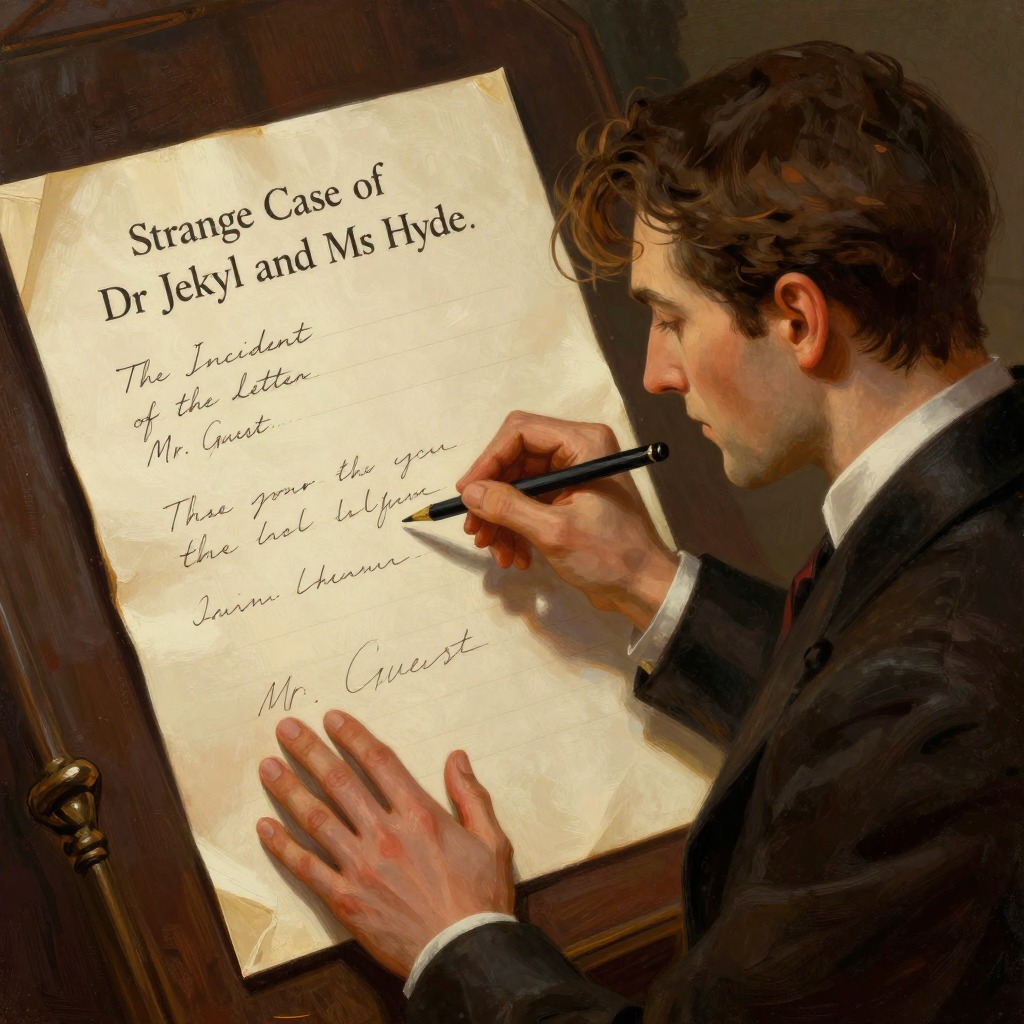
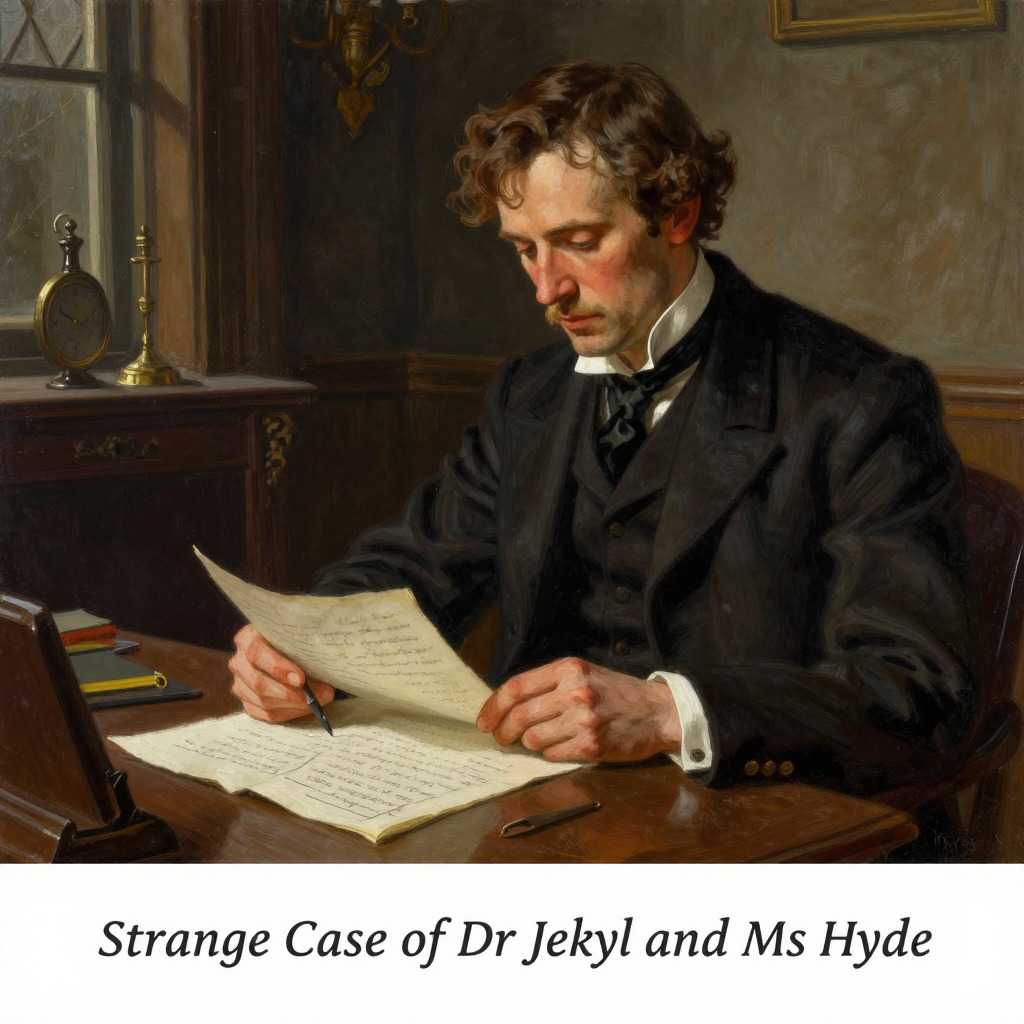
Mr. Guest, the head clerk of Mr. Utterson's law office, occupies a small but pivotal role in the unraveling of the Jekyll-Hyde mystery. A man of counsel and a great student and critic of handwriting, Guest is the first character in the novel to notice the startling resemblance between the handwriting of Edward Hyde and that of Henry Jekyll. His observation, made during a casual evening with his employer, provides Utterson with the first concrete evidence that the relationship between the two men is far more sinister and intimate than a simple case of blackmail or patronage.
Identity and Position
Guest is introduced as Utterson's head clerk, a man from whom the lawyer keeps fewer secrets than from anyone else. Utterson is not always sure he keeps as many as he means to, indicating a relationship of considerable trust and professional intimacy. Guest has often been on business to Dr. Jekyll's house and knows Poole, the butler, which means he is already familiar with the household and its routines. He is also a man of counsel, whose opinion Utterson values, and a passionate student of handwriting, a skill that makes him uniquely useful in the investigation.
The Handwriting Comparison
On the evening after the Carew murder, Utterson sits by his own hearth with Guest, sharing a bottle of old wine. The lawyer, seeking advice, shows Guest the letter purportedly written by Edward Hyde to Dr. Jekyll, describing it as a murderer's autograph. Guest studies it with passion and declares the writer not mad, but the hand odd. Just then, a servant enters with a note from Dr. Jekyll—a dinner invitation. Guest asks to see it, and when Utterson obliges, the clerk lays the two sheets of paper alongside and sedulously compares their contents. After a pause, he returns both, remarking that there is a rather singular resemblance: the two hands are in many points identical, only differently sloped. Utterson, struggling with himself, asks why he compared them, and Guest repeats his observation. The lawyer dismisses the matter as quaint and extracts a promise of silence, but the damage is done.
Consequences and Significance
No sooner is Utterson alone that night than he locks the note into his safe, his blood running cold at the thought: "Henry Jekyll forge for a murderer!" Guest's casual expertise has transformed the mystery. Before this moment, Utterson had suspected Hyde of blackmailing Jekyll; now he must confront the possibility that Jekyll himself is complicit in the crime, that the letter exonerating Hyde is a forgery written by the doctor's own hand. Guest never reappears in the narrative, but his single act of comparison sets Utterson on a new, darker path of suspicion, one that will eventually lead to the forced entry of the cabinet and the discovery of Hyde's corpse. Guest's role is that of the unwitting catalyst: a man of professional skill who, by doing his job, reveals a truth that his employer is not yet ready to face.